
Overblog Tous les blogs Top blogs Religions & Croyances
Suivre ce blog Administration + Créer mon blog
MENU

Traduire le blog - Translate into your language

14 janvier 2025 2 14 /01 /janvier /2025 20:30
What Do Biblically Accurate Angels Look Like?

Many misconceptions surround the appearance and duties of angels in the modern day. With the angel craze that was in the 1990s, many people were left with a faulty view of angels.

Despite the media presenting angels in one light, the Bible tells us what angels are really like, how they appear to people, and how they serve God. It is good to be aware of what angels are and what angels aren't according to biblical standards.

Bible Verses about Angels

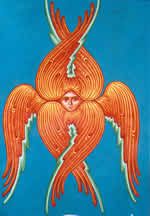
Isaiah 6:2 - Above him stood the seraphim. Each had six wings: with two he covered his face, and with two he covered his feet, and with two he flew.

Psalm 91:11 - For he will command his angels concerning you to guard you in all your ways.

Matthew 18:10 - “See that you do not despise one of these little ones. For I tell you that in heaven their angels always see the face of my Father who is in heaven.

Matthew 24:31 - And he will send out his angels with a loud trumpet call, and they will gather his elect from the four winds, from one end of heaven to the other.

Matthew 26:53 - Do you think that I cannot appeal to my Father, and he will at once send me more than twelve legions of angels?

Read moreBible Verses About Angels

What Do Biblically Accurate Angels Look Like?

Biblical Descriptions of Angels

As portrayed in traditional art, angels are not chubby, flying babies with wings. Rather, angels are spirit beings created by God to serve Him. Similarly, the Book of Hebrews tells us, "Are not all angels ministering spirits sent to serve those who will inherit salvation?" (Hebrews 1:14).

Angels are ministering spirits who are sent to do God's will. While many people believe in the existence of guardian angels, nowhere in the Bible are we told that we have guardian angels.

The angels we are told about in the Bible are Michael and Gabriel. Catholic tradition also includes Rafael; however, the Bible has no record of this angel. Therefore, the only two angels that are given a name in the Bible are Michael and Gabriel. 

Both are seen as obeying God, serving God, and helping those who God sends them to help. As in the case of Daniel the prophet, God sent Gabriel to talk with him (Daniel 9:20-23).

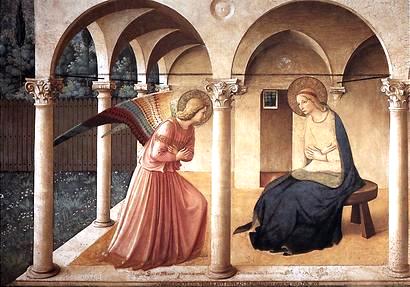
Gabriel is a messenger angel, which means he works as God's messenger to the people. We also see Gabriel fulfill this role when he appears to Mary (Luke 1:26-38). Michael is an archangel who fulfills his role to God of keeping humans safe at God's command.

While Gabriel and Michael are the only angels listed by name, many angels are recorded in the Book of Revelation. These angels are pouring out judgment on the people during the time of the tribulation; however, we are not given their names.

It could be we are not given their names for us not to worship or become obsessed with them. There are hundreds to thousands of angels, and one cannot be dogmatic in saying how many angels there are since God never gives us an exact number.

Seraphim is another type of angel that is recorded in the Bible, in the Book of Isaiah. While we are never told the names of the seraphim, we are told what they look like.

Isaiah 6:2 says, "Above him were seraphim, each with six wings: With two wings they covered their faces, with two they covered their feet, and with two they were flying."

What Do Biblically Accurate Angels Look Like?

From this description, we can ascertain that seraphim are not the traditional look of the way culture presents angels.

Seraphim is unique among the angels because never are we told Gabriel, Michael, or the other unnamed angels in the Bible look like this. From all practical standpoints, the angels who descend to earth and who are spoken of in the Bible look like men.

This has been a difficult teaching to grasp since angels are spirit beings and not physical beings. It is also important to mention that nowhere in the Bible are we told that angels possess human bodies. As it is, angels are spirit beings, yet they do seem to appear like a man.

There is another misnomer that angels are both females and males. This is not true, as the only angels presented in the Bible are males and have masculine pronouns. As much as we like to think that there are male and female angels, this isn't biblical and does not adhere to a sound doctrine.

As the Bible tells us, Eve was the first woman and is the mother of all the living. Since this is true, this further proves there were no females before the creation of Eve. Some could even argue that angels don't have genders; however, the Bible does refer to angels as "he," "his," and "him."

In addition to Gabriel and Michael, we are also told about Lucifer, who is known to us as Satan, the deceiver, and the enemy. Satan was an angel before he led the rebellion against God, so he and all of the angels who chose to follow him were expelled from heaven.

The Lord tells us Himself that he saw Satan fall as lightning (Luke 10:18). Satan and his demons are no longer defined as God's angels since they rebelled against Him. Never again will they be given a chance to re-enter heaven.

The Appearance of Angels

As mentioned, angels normally look like men, yet the seraphim have a unique appearance. Despite appearing as human men, they are said to be mighty, awe-inspiring, and normally leave the person feeling fearful.

Since those whom angels visit usually fall down in worship or awe, we can imagine how wonderful yet fearful-looking they are. There have been many accounts of people seeing angels in the modern day; however, we cannot be certain if these are angels or not.

Angels are intimidating, and as John tells us in Revelation, he falls down in worship of an angel, only for the angel to command him to get up and worship God (Revelation 22:9). The angel is glorious, beautiful, and brilliant, yet he reminds John that he is but an angel. All of the worship, praise, and glory belongs to God alone. The angel doesn't want to take credit for what needs to be given to God.

This shows us how humble, loyal, and loving angels are. They love God and desire all respect, glory, and praise to go to Him.

Therefore, angels have been misinterpreted in the modern day. As Christians, it is important for us to educate ourselves on the appearance of angels in order for us to know what angels are and what is not.

While the angels in drawings and artwork may appear cute, real angels don't look this way. Angels are spirit beings God created to serve Him and make His will be done on earth.

They are not dead loved ones, nor do we become angels when we die. There are many false beliefs surrounding angels, their appearance, and their purpose, and it is our responsibility to help share the truth about angels.

Why Does This Matter?

Rather than going along with the trend of guardian angels or misrepresenting angels in artwork, we need to turn back to a biblically accurate depiction of angels.

To lie about what angels look like is to go against God. Angels are beautiful creations of God, and it is right for us to see them as such.

They are mighty, powerful, and strong, yet they are not as mighty, powerful, and strong as God. We should not worship them, nor should we give them praise. Like the angel tells John, all glory, praise, and worship must be given to God alone.


Vivian Bricker author bio photoVivian Bricker obtained a Bachelor of Arts in Ministry, followed by a Master of Arts with an emphasis in theology. She loves all things theology, mission work, and helping others learn about Jesus. Find more of her content at C


For further reading:
What Do Angels Look Like?
Are There Different Types of Angels in the Bible?
What Are All the Names of Angels in the Bible?

Partager cet article
Repost0
13 janvier 2025 1 13 /01 /janvier /2025 20:24
Angels in the Bible

Angels are not the sole preserve of the great monotheistic religions of Judaism, Christianity and Islam. They were found long before in ancient animist and shamanic traditions. The figure of these celestial beings can also be found, in various forms, in Hinduism and Greek mythology. But it was the Semitic peoples of Mesopotamia who helped to shape the figure of the biblical angel as we know it. The nature and functions of angels would become increasingly clear throughout the history of Israel.

The biblical angel
There are 549 biblical verses about angels in the Old Testament and 203 in the New Testament (not counting references to demons or evil spirits). These holy messengers, sent by God to make His will known to mankind, are to be found throughout the Bible, from Genesis to Revelation.

In the Garden of Eden, they guard "the entrance to the tree of life" (Gen 3:24); with Jesus, they are sent to the various churches: "I, Jesus, have sent my angel to bring you this testimony about the churches. I am the offspring, the descendant of David, the shining morning star". (Rev 22:16)

In the Bible, the angel is presented as a personal being, different from God and man. He dwells in the heavens, surrounding God's throne, appearing to men in visible, luminous form, to guide and protect them. He is often clothed in white, symbolizing purity.

Although he has no sex and is entirely free of matter, he sometimes takes on the appearance of a child or a young man, a sign of his immortality.
In 787, the Council of Nicaea II authorized the representation of angels in human form. In popular imagery, they are depicted with wings to emphasize that they are pure spirits, quick to obey God.

The Old Testament
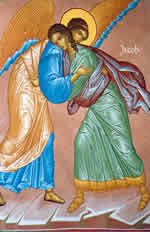
In the Old Testament, angels serve God's purpose. They protect Lot (Gen 19), save Hagar and her child Ishmael (Gen 21:17), hold Abraham's hand as he prepares to sacrifice his son Isaac (Gen 22:11). They appear to Jacob on the mysterious ladder that has inspired painters and mystics alike (Gen 28:12). Jesus refers to it indirectly: "You will see heaven opened, and the angels of God ascending and descending above the Son of Man." (Jn 1:51)

Angels also lead God's people: "I will send an angel ahead of you to guard you on your way and bring you to the place I have prepared for you. Respect his presence, listen to his voice. Do not resist him: he will not forgive you your rebellion, for my name is in him." (Ex 23:20-21).

They announce prodigious births (Jg 13, 3-7), assist the prophets Elijah (1 K 19, 4-8), Isaiah (Is 6, 1-4), Ezekiel (Ez 10), Daniel (Dn 6, 23), to name but a few. They are present in the Book of Job and occupy a central place in the Book of Tobit, especially the archangel Raphael, who delivers a message of peace: "Fear not! Peace be with you! Bless God forever" (Tb 12:7).

Finally, the angels, mentioned several times in the Psalms, take part in the praise of the cosmos: "You, all his angels, praise him, praise him, all the universes." (Ps 148:2) They bless the Lord, inspiring people to taste his goodness and protection.
 

The New Testament

annonciation

Angels are mentioned less in the New Testament than in the Old. They fade into the background when Jesus appears, since he is above them; he is the center and summit of Revelation: "And the Word became flesh, and dwelt among us, and we beheld his glory, the glory which he received from his Father as the only Son, full of grace and truth" (Jn 1:14). Present at the beginning of his earthly life, the angels reappeared at his agony and on Easter morning, rediscovering their role as God's messengers.

Luke, for example, begins his Gospel with two apparitions: that of an angel announcing to Zacharias the birth of John the Baptist (Lk 1:11-20); and that of the archangel Gabriel announcing to Mary the birth of the Savior (Lk 1:26-38). God enters our history through the Spirit, who takes Mary under his shadow. For the evangelist Matthew, an angel appears to Joseph in a dream, asking him to take his wife and child with him. He accepts this mystery, "hidden for ages in God" (Eph 3:9).

He freely entrusts himself to God, as Mary had done at the Annunciation. The angel also orders him to flee to Egypt with Mary and Jesus, and to return to Palestine when Herod dies (Mt 2:13-23). The Messiah's victory will only come through humility and annihilation, not through force and war.

"The Word became flesh, and the journalists of this time know nothing of it!" wrote Bernanos in his Journal d'un curé de campagne. Except the angels. In the silence of the night, an angel announces the happy news to the shepherds:

Today, in the city of David, a Savior is born to you, who is Christ, the Lord. And this is the sign that is given to you: you will find a newborn baby wrapped in swaddling clothes and lying in a manger."

And suddenly there was with the angel an innumerable heavenly company, praising God and saying, "Glory to God in the highest, and peace on earth to men, whom He loves" (Lk 2:11-14).
 

his song of the angels will never cease to resound in the praise of the Church.

Jesus and the angels

When Jesus enters public life, angels serve him in the desert, after he has suffered Satan's assaults and triumphed over temptations: "Then the devil left him. And behold, angels came and ministered to him." (Mt 4:11)

They comforted him in his agony (Lk 22:43), even though he could have been saved by them: "Do you think I cannot call on my Father? He would immediately put at my disposal more than twelve legions of angels." (Mt 26:53)

The angels roll away the stone from the tomb and appear before the women, announcing the Good News of the Resurrection (Mt 28, 1-3; Mk 16, 5; Lk 23, 4-6).

They bear witness to the Firstborn from the dead to Mary Magdalene, weeping near the tomb: "She saw two angels dressed in white, sitting, one at the head and the other at the feet, in the place where Jesus' body had lain". (Jn 20:12) When Jesus returns to the Father, they comfort the disciples by rekindling the hope of his return in glory. "

And while they were still staring up at the sky where Jesus was going, behold, there stood before them two men in white garments, who said to them, "Galileans, why are you standing there looking up to heaven? This Jesus, who was taken up from you into heaven, will come just as you saw him go into heaven." (Acts 1:11)

When he spoke of the end of time and the resurrection of the dead, Jesus said that we take neither wife nor husband, "but are like angels in heaven" (Mt 22:39). In a parable, he shows that the kingdom of heaven is like a net that is cast into the sea and brings back all kinds of things.

The fishermen then sort out what is good and what is not. "So it will be at the end of the world: the angels will come out to separate the wicked from among the righteous" (Mt 13:49). In the parable of the tares, sown by the devil, and the good grain, sown by the Son of Man, he explains that the harvest signifies the end of the world, and that the reapers are the angels.

Just as the tares are taken away and thrown into the fire, so it will be at the end of the world. The Son of Man will send out his angels, and they will remove from his kingdom all those who cause stumbling and do evil, and throw them into the furnace, where there will be weeping and gnashing of teeth. Then the righteous will shine like the sun in their Father's kingdom. He who has ears, let him hear! (Mt 13, 40-43)
*** Translated with www.DeepL.com/Translator (free version) ***

The beginnings of the Church

In the Acts of the Apostles, the nascent Church experiences the defending and protective ministry of angels. During the night, an angel opens the prison doors and leads the Apostles out (Acts 5:19).

Another spoke to Philip, telling him to take the road down from Jerusalem to Gaza (Acts 8:26). An angel enters Cornelius' house and asks him to send men to Jaffa and bring Peter (Acts 10:3-8). The same Peter experienced the angel's protection, freeing him from his chains in prison (Acts 12:7-11).

An angel also appeared to Paul, telling him that he would not perish at sea (Acts 27:23). The same Paul wrote: "I could speak all the languages of men and of angels, but if I lack love, if I lack charity, I am but a resounding brass, a clanging cymbal." (2 Cor 13:1)

But this does not stop him from raving about the great mystery of the Incarnation: "Great indeed is the mystery of our religion: it is Christ, manifest in the flesh, justified in the Spirit, appeared to the angels, proclaimed to the nations, believed in the world, taken up in glory" (1 Tim 3:16).

Throughout her history, the Church has venerated these heavenly spirits, who defend her against evil and lead her to the very heart of the mystery of the Cross. She seeks their intercession, as her members march "to the city of the living God, the heavenly Jerusalem, to myriads of angels celebrating." (Heb 12, 22) They are the ones who carry our prayers to God.

And I saw the seven angels who stand before God: seven trumpets were given to them. And another angel came and stood by the altar, carrying a golden censer, and was given much incense to offer with the prayers of all the saints on the golden altar before the throne. And by the angel's hand went up before God the smoke of the incense, with the prayers of the saints. (Rev 8, 2-4)
 

Jacques Gauthier

Partager cet article
Repost0
10 janvier 2025 5 10 /01 /janvier /2025 20:30
The incredible story of the icon of Our Lady of Perpetual Help

The Basilica of Notre-Dame du Perpétuel Secours, in the 11th arrondissement of Paris, celebrates 150 years of veneration of the icon in Paris on November 8. An icon traditionally attributed to Saint Luke


Among the six basilicas in Paris is Notre-Dame du Perpétuel Secours, on boulevard de Ménilmontant in the 11th arrondissement.
The icon of Notre-Dame du Perpétuel Secours was installed here on November 8, 1874, long before the shrine was elevated to the rank of Minor Basilica by Paul VI in 1966. This year, the parish is planning three days of celebrations to mark 150 years of veneration of the icon in Paris.
But the original story of the icon, full of twists and turns, goes back much further.
Traditionally, it is attributed to Saint Luke, the evangelist to whom we owe so much. On discovering the finished work, the Virgin Mary is said to have told him: "My help will always accompany this image". The letters above the Virgin's head proclaim her "Mother of God" (Theotokos in Greek), a term attributed to Mary in 431 by the Council of Ephesus, which professed the two human and divine natures of Jesus and affirmed that Mary is the "Theotokos".
As early as 444, a reputedly miraculous icon of the Mother of God from Jerusalem was presented to the Roman emperor Theodosius II.
In 451, in Constantinople, his sister St. Pulcheria had a church built to display it for the veneration of the faithful. The icon was then the object of a weekly procession and received numerous graces.
It was venerated in Constantinople until the fall of the Byzantine Roman Empire in 1453.
Thanks to the miracles attributed to it, the icon was widely copied, notably by the monk Lazarus in the 9th century.
He is said to have added the two Archangels Michael and Gabriel, on either side of the Virgin, presenting Christ with the instruments of the Passion. The Byzantine-style representation we know today dates, according to historians, from between the 10th and 14th centuries.
The original was lost, but a stolen copy kept the devotion alive.
In 1453, the church where the icon was venerated burned down and the original was lost for good. But an unexpected turn of events kept the devotion alive.
In 1496, a Genoese merchant en route to Rome stole a copy of the miraculous icon from Crete.
Sailors credited the icon with having survived a shipwreck.
Hence the name Our Lady of Perpetual Help.
In any case, the painting remained in the house of this Roman merchant for several years until 1499, when it was found in the church of St. Matthew in Rome, located in Via Merulana.
According to the annals of this church, it was thanks to a request made to her father - the famous merchant - by his six-year-old granddaughter. In a dream, she heard Mary tell her that the icon had to be transported to the Church of St. Matthew in Rome.
It was entrusted to the Augustinian friars in charge of St. Matthew's Church.
It was venerated there until the church was destroyed in 1798 by Bonaparte's army, during which time it was hidden in the chapel of the Monastery of St. Mary in Posturela.
In 1864, it was donated by Pope Pius IX to the Redemptorist congregation and placed in St. Alphonsus church, rebuilt on the site of St. Matthew church.
In May 1866, Pius IX came to pray at the new sanctuary and instructed the Redemptorists to spread the cult of the image throughout the world.
Saint Charles de Foucault helped spread the devotion, naming the gardener's hut he lived in at Nazareth the "Hermitage of Our Lady of Perpetual Help" in 1897.

Prayer to Our Lady of Perpetual Help

"O holy Virgin Mary, who to inspire us with boundless confidence, wished to take the sweet name of Mother of Perpetual Help, we beg you to help us at all times and in all places, in our temptations, after our falls, in our difficulties, in all the miseries of life and especially at the moment of our death.
Give us, O charitable Mother, the thought and the habit of always turning to you, for we are sure that if we faithfully invoke you, you will be faithful to help us.
So obtain for us this grace of graces, the grace to pray to you unceasingly and with the confidence of a child, so that, by the virtue of this faithful prayer, we may obtain your perpetual help and final perseverance.
Bless us, O tender and helping Mother, pray for us now and at the hour of our death.
Amen."


Partager cet article
Repost0